Many of our Penfolds wines include the moniker ‘Bin’ in their title, and we are often asked about the story behind the numbers. The term ‘Bin’ originated from the storage location (BIN) in the Penfolds Magill Estate cellars in South Australia, where our wines were historically stored for maturation.
While many carry Bin numbers that reflect these early cellar locations, other wines in the Collection draw their names from places, historical references and early experimental batches that helped shape their identity.
Each wine carries its own story. Discover some of our collectors’ favourites.
Many of our Penfolds wines include the moniker ‘Bin’ in their title, and we are often asked about the story behind the numbers. The term ‘Bin’ originated from the storage location (BIN) in the Penfolds Magill Estate cellars in South Australia, where our wines were historically stored for maturation.
While many carry Bin numbers that reflect these early cellar locations, other wines in the Collection draw their names from places, historical references and early experimental batches that helped shape their identity.
Grange traces its name to Grange Cottage, built in 1845 at Magill Estate as the original home of our founders Dr Christopher and Mary Penfold.
Max Schubert, the creator of Grange, established Penfolds Bin system by labelling his first experimental Grange (then Grange Hermitage) as Bin 1 – the original location of the 1951 vintage. This system enabled the winemaking team to easily identify wines by type and style and to track their location.
Early Grange vintages carried various Bin numbers, until the winemaking team settled on Bin 95 in 1961. It is thought that 9 barrels were held at Magill and 5 barrels at Auldana, leading to the adoption of Bin 95.
In 1959, the winemaking team set out to create a Shiraz using grapes from our Barossa vineyards. They sourced parcels of fruit from the now renowned Kalimna vineyard in the Barossa Valley and crafted Bin 28 Shiraz, which became the first of our official Bin numbered wines.
Named after its original binning compartment, Bin 28 was first released as a single vineyard wine. Today, it is a multi-regional blend, showcasing the allure of warm-climate Australian Shiraz.
Bin 28 was first made while Grange was still being produced in secrecy.
Penfolds landmark Cabernet is inspired by the iconic jet that took it to the world. The rich and powerful Bin 707, our first commercial release of a single cabernet-based wine, is linked to Max Schubert’s dream of making a great Australian red wine that could last at least 20 years.
During the ‘50s and early ‘60s, Cabernet Sauvignon was primarily used for blending, but Schubert’s breakthrough with the varietal as a stand-alone wine came in 1964 with an inaugural vintage.
The wine’s name was later coined by Rowan Waddy, a former Qantas employee and Penfolds Sales and Marketing Manager, reflecting his passion for aviation. Fittingly, much of the first vintage was sold to Qantas and served to First Class passengers.
Today it is our flagship Cabernet Sauvignon, released only in exceptional vintages.
Penfolds naming conventions are more than identifiers – they reflect heritage, innovation, and the pioneering spirit that has shaped our wines for generations. Each Bin number tells a story of origin, evolution, and craftsmanship. As the Penfolds Collection grows, these names preserve our heritage while expressing our continued commitment to excellence.
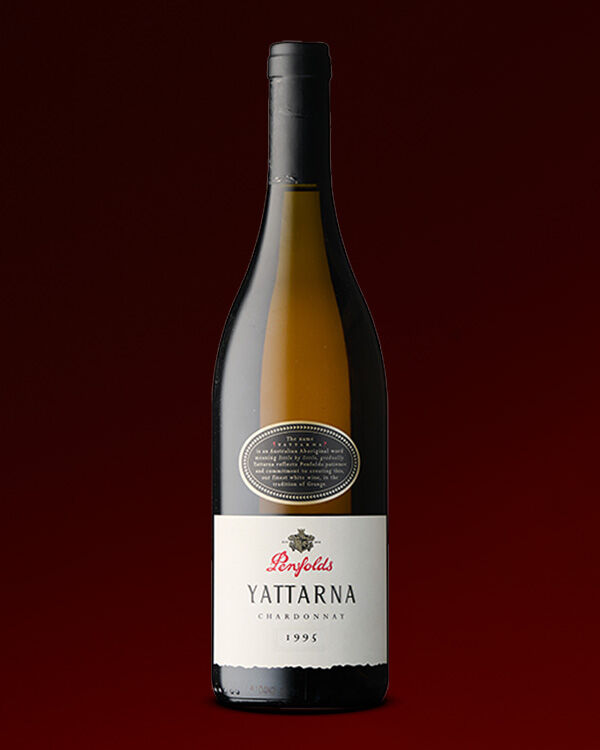
The release of Yattarna, after 144 winemaking trials, marked a new chapter in the Penfolds story. The inaugural 1995 vintage was arguably the most talked about and early anticipated white wine in Australian history - dubbed by the media as “White Grange”, it reached the front pages of Australia’s national newspapers. The Bin number comes from the number of trials it took to perfect a Chardonnay like no other.
The name Yattarna is drawn from the local indigenous language, meaning ‘little by little, gradually’.
The initials RWT stand for ‘Red Winemaking Trial’, the internal name given to the project when development began in 1995. Led by (then Chief Winemaker) John Duval through the 1990s, the early barrels were simply marked ‘RWT’ in chalk. Naturally no longer a ‘trial’, the wine was officially allocated its Bin number in 2016 – Bin 798 – derived from the alpha‑numeric telephone keypad spelling of RWT.
Bin 389 is one of Australia’s most cellared wines, its history closely tied to the development of Grange and Max Schubert’s ambition to create a ‘dynasty of wines which all bear an unmistakable resemblance to each other.’ Named after its original binning compartment at Magill Cellars, the wine, after bottling, was stored unlabelled in Bin 3, sections 8 and 9. The original bins were the deep underground drives at Magill Estate, carved out by cellar hands in the early 1900s.
Intrinsically linked to Penfolds beginnings, this wine bears its name from the original vineyard at Magill Estate – Penfolds spiritual home in Adelaide, South Australia. A single monopole vineyard that surrounds the historic Grange cottage. Much of the land around Magill Estate was sold in the 1970s, and in order to ensure the survival of the remaining five hectares of old Shiraz vines, Max Schubert designed a ‘French chateau-style red wine, distinctly different to that of Grange’, he proposed it to be name ‘Chateau Magill’.
St Henri’s name predates Penfolds, with the first vintage made by a French winemaker, Leon Mazure, in 1888 at Auldana Cellars, adjacent to Penfolds Magill Estate. Most likely named after his son Henri or wife Henriette. When Penfolds purchased Auldana Cellars in 1943, John Davoren discovered a collection of Mazure’s wines in the cellars and decided to revive St. Henri as a homage to the great winemaking pioneer.
A cool‑climate, perfumed exemplar of Shiraz, Bin 128 reflects both its birthplace and its heritage. Named after a section of the underground drives at Magill Estate, it carries an old‑world sensibility balanced with new‑world confidence. Sourced exclusively from Coonawarra, its elegance, fine tannins, and aromatic lift offer a refined counterpoint to its warmer‑climate cousin, Bin 28.
The Insider’s choice for shared moments, Bin 407 is beloved by Penfolds collectors around the world. A benchmark South Australian Cabernet Sauvignon, its Bin number was designated as a nod to its older sibling Bin 707. Developed in response to increasing availability of high-quality Cabernet Sauvignon fruit, it is a wine of impeccable approachability in its youth and yet with the promise of reward in the cellar. A wine always led by nose, not trend.
Named after the cellar in which it is matured - ‘Cellar 23’ at Magill Estate, where Pinot Noir barrels have been stored since 1997 when the Cellar Reserve program began. A bold and evolving style with strawberry hues and cherry-like characters.
Crafted in traditional Penfolds style. A generous wine with balanced fruit flavours and softly integrated oak. Its Bin number was allocated not due to its position but because it uses the same oak barrels previously used for Bin 128, Bin 28, and Bin 389 – the ‘8’ being the common denominator.
The flagship of the Penfolds Californian range and a Wine of the World that encapsulates a bold blending alliance between two hemispheres.
This wine represents a quantum leap forward for Penfolds. The journey began in 1998, when cuttings from Magill Estate and Kalimna were planted in Californian soil in Paso Robles – laying the foundation for what would become Quantum and the Bin 98 designation.
A worldly release of northern hemisphere excellence, reinforced by South Australian Cabernet Sauvignon. A wine of distinction with meticulous vineyard and block selection. Its name is derived from the percentage of South Australian Cabernet Sauvignon in the inaugural blend – 14.9%
A wine that seeks to redefine Napa Valley Cabernet through a Penfolds lens. The name Bin 704 draws inspiration from the ‘mirror’ or ‘reverse’ image of its Australian Bin 407 stablemate, a wine that also respects varietal expression.
Named after the original vineyard, Creston 600 Ranch, a site closely tied to Penfolds early beginnings in California. This is a quintessential Australian blend – distinctly Penfolds, yet transformed by Californian soil. Grapes from the original plantings continue to feature in the blend.
FWT is an acronym for ‘French Winemaking Trial’. Fruit is sourced from exceptional vineyards across the Médoc region using time-honoured Penfolds techniques. The Bin number was derived from Max Schubert’s total expenses from his first trip to Bordeaux in 1951.
A classic Australian blend and signature style labelled as a Vin de France. Numbered ‘543’ due to the first trial consisting of 43 barrels stored in row 5 of our French winery.
Penfolds has a long and rich history with Grenache, dating back to the 1800s, where the varietal played, and continues to play, a vital role in our fortified wine production.
Bin 21 represents a contemporary expression of this legacy. Its name is a nod to the 21 year gap between the release of this wine’s inaugural vintage in 2022 and the first Cellar Reserve Barossa Valley Grenache of 2001.
In order to subscribe to a Penfolds Wine Plan, you first need to log in, or register for a new account with Penfolds. Please enter your details below and continue to your Wine Plan.
Or
Become a Penfolds Member to receive great benefits, including complimentary shipping and exclusive offers.
In order to access special member-only content and offers, we require you to reset your password.
Please check your email for your password reset instructions, it make take a few minutes to receive the email.
Contact us on 1300 095 930 between 9am-5pm AEST Monday to Friday. Read our Terms & Conditions, Privacy Policy and Terms of Sale.
You will be logged-out on changing the country.
Do you wish to continue?
Your cart will be emptied on changing the country.
Do you wish to continue?
Thank you for your submission.